What to Do on Rest Days from Exercise

What to Do on Rest Days from Exercise

Working out can be addictive for some people or training is simply ingrained in their lifestyle. Working up a sweat has that feel-good factor. It can even be meditative and a stress-reducing activity. But your body does need rest days for it to repair and to come back stronger. What does that mean, though? How much rest should you be getting and what kind?

Rest does not necessarily mean staying completely inactive. This wholly depends on the intensity of your usual workouts. How many times a week do you work out? How many hours do you spend at the gym in a day? If you’re just a beginner, you can rest every third day. While for regular exercisers, taking a once-per- week rest day is generally recommended. On your rest days, beginners can do light exercises, such as yoga or a light activity. For the more active, your rest days can include a low-intensity activity or some simple stretching. Just make sure you’re giving yourself a break from intense activity.

Here’s how you can make the most of your rest days without resorting to planting yourself firmly on the couch the whole day.

Tai chi

Tai chi is just as relaxing as it seems. The slow, graceful movements will put you in a meditative state while still working on your strength, balance and body awareness. Tai chi has even been proven to have pain-relieving benefits, making it the perfect low-impact workout for your weary body.

Yoga

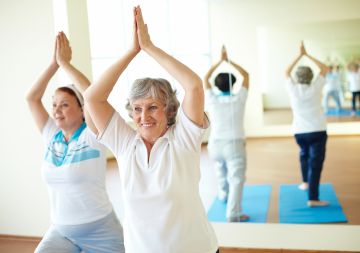
If you decide to make yoga your rest day activity, be sure to choose a relaxing yoga class that doesn’t involve complex, physically demanding postures. Yin yoga is a good example of a soothing type of yoga class. Yin yoga involves extended periods of holding poses, allowing for the release of any tight muscles. This type of yoga is more about recovery than getting fired up.

Swimming

Swimming, in general, is just a fun way to decompress. While suspended in water, our bodies can feel weightless and this allows our joints to relax. Whether you simply want to float around or do a few laps, your body can experience benefits like improved circulation in the muscles, blood vessels and heart due to the water pressure.

Walking

An early morning or post-dinner evening walk can truly be pleasant on your days off. As long as you keep to a moderate pace, walking can be a great bit of cardio exercise. This also builds your endurance. 30 to 40 minutes of walking is recommended.

Cycling

Similar to walking, a relaxed ride on a bicycle, whether stationary or moving, can be beneficial. As long as you cycle at a low intensity, you can get a mild cardio workout without impacting your joints.

A good soak

short interval training near me

What’s better than a long soak in the tub for all those aching joints and muscles? Maybe add Epsom salts. The combination of magnesium and sulfur will leave your sore muscles feeling calm. Even better, Epsom salts have been found to help reduce bloating, and magnesium has been proven to lower cortisol.

A soothing massage

A disciplined exerciser like you deserves some physical therapy in the form an indulgent massage. Your muscles will be all sorted out, going right into full healing mode. Depending on your schedule and budget, you should take a regular massage. Be sure to tell your therapist you want benefits like release and relaxation.

Sources: https://www.self.com/story/everyday-athletes

https://www.shape.com/blogs/fit-list-jay-cardiello/how-properly-rest-your-workout

https://www.mindbodygreen.com/articles/what-should-you-actually-do-on-rest-days

https://www.womenshealthmag.com/fitness/a19972853/rest-day-tips/
What to Do on Exercise Rest Days

What to Do on Exercise Rest Days

Working out can be addictive for some people or training is simply ingrained in their lifestyle. Working up a sweat has that feel-good factor. It can even be meditative and a stress-reducing activity. But your body does need rest days for it to repair and to come back stronger. What does that mean, though? How much rest should you be getting and what kind?

Rest does not necessarily mean staying completely inactive. This wholly depends on the intensity of your usual workouts. How many times a week do you work out? How many hours do you spend at the gym in a day? If you’re just a beginner, you can rest every third day. While for regular exercisers, taking a once-per- week rest day is recommended. On your rest days, beginners can do light exercises, such as yoga or a light activity. For the more active, your rest days can include a low-intensity activity or some simple stretching. Just make sure you’re giving yourself a break from intense activity.

Here’s how you can make the most of your rest days without resorting to planting yourself firmly on the couch the whole day.

Tai chi

Tai chi is just as relaxing as it seems. The slow, graceful movements will put you in a meditative state while still working on your strength, balance and body awareness. Tai chi has even been proven to have pain-relieving benefits, making it the perfect low-impact workout for your weary body.

Yoga

mobile personal training near me

If you decide to make yoga your rest day activity, be sure to choose a relaxing yoga class that doesn’t involve complex, physically demanding postures. Yin yoga is a good example of a soothing type of yoga class. Yin yoga involves extended periods of holding poses, allowing for the release of any tight muscles. This type of yoga is more about recovery than getting fired up.

Swimming

Swimming, in general, is just a fun way to decompress. While suspended in water, our bodies can feel weightless and this allows our joints to relax. Whether you simply want to float around or do a few laps, your body can experience benefits like improved circulation in the muscles, blood vessels and heart due to the water pressure.

Walking

An early morning or post-dinner evening walk can truly be pleasant on your days off. As long as you keep to a moderate pace, walking can be a great bit of cardio exercise. This also builds your endurance. 30 to 40 minutes of walking is recommended.

Cycling

Similar to walking, a relaxed ride on a bicycle, whether stationary or moving, can be beneficial. As long as you cycle at a low intensity, you can get a good bit of cardio workout without impacting your joints.

A good soak

What’s better than a long soak in the tub for all those aching joints and muscles? Maybe add Epsom salts. The combination of magnesium and sulfur will leave your sore muscles feeling calm. Even better, Epsom salts have been found to help reduce bloating, and magnesium has been proven to lower cortisol.

A soothing massage

A disciplined exerciser like you deserves some physical therapy in the form an indulgent massage. Your muscles will be all sorted out, going right into full healing mode. Depending on your schedule and budget, you should take a regular massage. Be sure to tell your therapist you want benefits like release and relaxation.

Sources: https://www.self.com/story/everyday-athletes

https://www.shape.com/blogs/fit-list-jay-cardiello/how-properly-rest-your-workout

https://www.mindbodygreen.com/articles/what-should-you-actually-do-on-rest-days

https://www.womenshealthmag.com/fitness/a19972853/rest-day-tips/

Fitness Workouts For Busy Mums

Fitness Workouts For Busy Mums

Packing lunch, scheduling pick-ups and appointments, shopping for groceries, getting to work on time and managing your office tasks–it seems like there’s hardly any time for a workout. There’s either too much to do in one day or you’re too exhausted by the end of the day to even roll out your yoga mat, much less drive to the gym. Staying physically active doesn’t need to be as staggering of a task as you might think. You don’t need to attend all sorts of classes or jump right on the latest fitness trend. You don’t even need to leave the comfort of your own home (or leave behind your kids who suddenly have a school project due the next morning).

The exercises listed here can be done in as little as 10 minutes. That’s right, that’s all the time you need in a day to stay on track towards your fitness goals. When pressed for time, what you want to focus on is quality, not quantity. For equipment, you can even use simple household items, like a towel or water bottles. You can also easily modify these workouts to fit your own needs, like if you’ve just had a baby. Even if your space is cramped and covered in toys, you could still manage to do these exercises. Just make sure you don’t accidentally step on some marbles.

Hamstring Curls

Get into starting position by lying on your back with your knees bent. Place your heels on a towel (on a slippery surface). Go into a bridge by lifting your hips up while squeezing your glutes. When you’ve fully extended your hips, extend your legs by pushing your heels as far out as you can. Avoid touching your glutes to the ground. Once your legs are fully extended, engage your hamstrings and drive your heels into the ground. Pull your heels back in towards your body as you lift up your hips up again. Do 15 reps.

Jump Lunge

Begin by standing tall and arms hanging by your sides. Take a step forward with your right leg and bend your knees so both legs are at 90 degrees. Be sure your right knee is aligned with your foot and your left knee is hovering slightly above the ground. Now that you’re in a lunge position, dynamically move up and jump into the air. As you are in the air, move your front leg back and back leg forward, before landing back down. Do 20 reps or 10 per leg. Alternatively, you can perform the lunge in place, i.e. without the jump.

Chair Squats

Take a stable chair and stand in front of it. Your feet should be hip-distance apart with toes pointing forward. Lean your chest slightly forward. Bend your knees and lower yourself to the chair, tapping your bottom on the chair, then standing up. Keep your weight evenly spread in your feet and knees in line with your feet. Do 10 to 12 reps.

Modified Push-Ups

high intensity fitness training in my area

Get on the ground on all fours and tuck your knees together. Walk your hands out and lift your feet. Place your hands slightly wider than shoulder-width. Make sure your head, back and hips are aligned. While keeping your core engaged, bend your elbows and lower your chest toward the floor, then press back up. Do 10 to 12 reps.

Sources:

https://www.active.com/fitness/articles/best-30-minute-workouts-for-busy-moms?page=1

The Best Exercises for Leg Day

The Best Exercises for Leg Day

Our leg muscles are the largest muscle group in the body, so it’s no wonder that even the most diligent fitness fans may dread leg day. Leg exercises are tough, sweaty and both burn and require a ton of energy. Your strength and stamina are put to the test while your heart and lungs will be pumping and heaving. After all of that, you can barely sit down or take a flight of stairs.

Cheap personal trainer near me

Another reason you might not be keen on leg day is that you could be making mistakes. One such mistake is focusing too much on machine and isolation exercises. These shouldn’t be treated as core exercises, but merely supplementary. Incorrect squats could also be another issue as well as doing too many reps. So, is there any way to get through leg day? If you stick to these exercises, you just might be able to do that.

First, a few things you need to know about your leg muscles. The muscles in our lower body are numerous and form an intricate system. But, for the everyday gym-goer, here are the muscles you need to remember:

Quadriceps

The quadriceps or quads are on the front of our thighs and function to extend our knee. Our quads get fired up when we squat, lunge or step upward. Our quads are essential to running, jumping and kicking.

Hamstrings

On the back of our thighs are our hamstrings, which help to flex (bend) at the knee. Our hamstrings are needed for rotating the leg and assisting our glutes to extend our hips and move our thigh backward.

Calf muscles

The two muscles on each lower leg allows us to point our foot or rise up onto our forefoot. Another muscle along our shin is responsible for flexing our foot.

Adductors

These muscles pull our thighs together and ensure stability.

Glutes

While not part of our legs, the gluteus maximus, medius and minimus are part of our hip. Our glutes work to extend our hips, move our legs away from the body and rotate our legs outward.

Ready for leg day? Try out these exercises.

Pistol Squat

  1. Get into starting position by standing up and holding your arms straight out in front at shoulder level.
  2. Raise your right leg off the floor and hold it there.
  3. Lower your body as far as you can while moving back your hips. Pause in this position before returning back to starting position.

Side Lunge

  1. For this exercise you will need a pair of dumbbells. Get into starting position by standing upright with hands on your sides.
  2. While engaging your core, take a large step to the right with your right foot. The left leg should be straight.
  3. Bend your right leg until the thigh is parallel to the floor. At the same time, lower the dumbbells to either side of your right leg.
  4. Reverse the movement and return to starting position. Repeat on the other side.

Step Up Convicts

  1. For this exercise you will need a knee-high platform and a pair of dumbbells. Get into starting position by standing upright facing the platform and lunge your right leg backwards.
  2. Push yourself back up to a standing position without touching the floor.
  3. Step your right leg onto the bench while bending your left knee and raising it as high as you can.
  4. Reverse the movement and return to starting position.

Jump Squat

  1. You will need a dumbbell or a sandbag for this exercise. Get into starting position by standing with your feet apart at hip-width and holding your dumbbell or sandbag in front of you.
  2. Bend your knees and push your hips back until your thighs are parallel to the floor. Be sure to keep your back flat.
  3. Jump up explosively and as high as you can.
  4. Softly land, returning to a squat. Repeat.

Sources: https://www.muscleforlife.com/best-legs-exercises/

https://www.womenshealthmag.com/fitness/a19982843/best-leg-exercises/

Weight Lifting Tips for Beginners

Weight Lifting Tips for Beginners

Weight training for building strength by lifting weights is one effective workout. Some people, especially those who are gearing towards weight loss, try to avoid weight-lifting since it supposedly will build up your muscles rather than shedding fat. This is not entirely true! Weight-lifting can burn an incredible amount of calories, plus, who doesn’t want to build a bit of their strength while they’re at it? Aside from losing weight, you’ll also do double duty by keeping both slim and toned. You can get the kind of results you simply can’t expect from working out on a treadmill. Another benefit is that resistance training through weight-lifting will increase your body’s metabolic rate, which means you’ll burn more calories even after you’re done working out.

strength training workouts pullenvale

Weight-lifting can seem overwhelming if you’re new to it. So many machines and kinds of weights! Which one do you use and how much weight do you need? How often should you do weight training? For beginners, it’s good to know a few pointers to maximise your workout while keeping safe and staying motivated.

Warm up

A warm-up consisting of similar movements to your workout (although at a lower intensity) is best to prepare for your weights workout.

Start small

There’s no need to impress all the pro weightlifters around you by heading straight for the huge barbells. What you need to worry about more is proper technique and form. You can even start with no weights! When choosing weights, pick a light weight 2kg to 7kg and begin with 10 to 15 reps. A good indication of whether you’re using the correct weights is if your muscles are feeling just about exhausted at 12-15 reps.

Find your balance

Don’t risk getting injuries and learn the correct approaches and form. Balance, in particular, is a key technique. In most cases, one side of the body is stronger than the other, but make sure to spread your workout equally. One way to ensure this is the use of isolated moves, such as single-leg squats. There are also specific techniques when it comes to position, grip and motion, and the best way to learn this to have a trainer around. Alternatively, you can look up exact tips online.

Pick up the pace

When beginning your routine, repeat the same moves two to three times a week. You want to slowly level up, increasing weights and reps as you move forward. You don’t want to hit a workout slump, though, because your muscles will eventually resist the same training it’s been used to for so long.

Rest

Any kind of workout will “break” your muscles, but especially resistance training. Little tears form in your muscle fibres, so they need time to heal. The most effective way to accomplish that is by giving your body a break. Allow yourself 48 to 72 hours of rest in between workouts. You can also aid the healing process by staying hydrated and eating plenty of muscle-repairing protein and energy-boosting carbs.

Fitness and Workout Myths

Fitness and Workout Myths

When you’ve just started a commitment to dieting and working out, you might have some preconceived and rather simplistic notions about fitness. Maybe you haven’t talked to a fitness trainer, maybe your more athletic friends have been saying some contradictory things. What are the most dangerous fitness myths out there that you might unintentionally be subscribing to? It’s important to be aware of the facts and fiction to avoid injuries and health risks. Like any other huge investment, take the truths about fitness seriously, so you won’t only reach your goals, but fend off bad advice that could lead to more harm than good.

The best time of the day to work out is in the morning

The truth is that studies have found the most effective time of the day to exercise is the late afternoon and early evening or between 4 pm and 7 pm. Strength and flexibility have been found to be greatest during this time of the day. However, that doesn’t mean there are no benefits to working out first thing in the morning. It can be invigorating and give you the energy you need for the rest of your day. Ultimately, experts agree the best time is whatever time allows you to work consistently.

Weight training will build muscle

People, particularly women, who want to lose weight tend to avoid lifting weights since this exercise is associated with muscle builders. The stereotype is untrue. Weight training will strengthen muscles more than build them.

You’ll lose weight just by exercising

Regular physical activity is key to weight loss, but so is a balanced diet. You can’t feast on junk food the night before and expect to burn it all off the next day at the gym. The food you eat can have long-lasting effects on your body. A diet lacking in proper nutrition can cause hormonal imbalance, resulting in changes in your metabolism, blood pressure, sugar levels, muscle building and more.

Sit-ups will give you 6-pack abs

Performing crunches or sit-ups should melt away all the fat in your abdominal area, right? Not at all! What this will do is potentially strengthen the under-lying muscle but will do nothing to burn fat.

Sports drinks are better than water for rehydrating

Sports drinks are marketed to replenish your electrolytes, ensuring you remain energised throughout and after your workout. What most sports drinks are actually mainly made up of are water and sugar. Sugar can lead to weight gain and other worse results, especially if you want to keep your blood sugar levels regulated. Plain water is your best bet. If you need to re-energise, high-protein snacks or healthy carbs should be your go-to. An exception to the rule maybe if you are doing more than 90 minutes of cardio exercise.

More sweating is better

When you sweat, this is the body’s way of regulating your internal temperature. Excessive sweating doesn’t necessarily mean you’re working hard or that you’re sweating out toxins. How much you sweat is the result of the environment and your own physiology.

Pain is good

If you’ve heard the term “no pain, no gain,” don’t take it too literally. Soreness after a workout is common due to inflammation and small tears in the muscle fibre. You may not want to give up, but listen to your body. If you’re feeling sharp, persistent pain in your muscles, joints and ligaments, that’s a sign to stop and see a medical professional.

The Benefits of Working Out Twice a Day

The Benefits of Working Out Twice a Day

What does your fitness routine look like? Are you going to the gym 3 or 4 times a week? Most likely, you’re doing a single workout session on any particular day. For some people, that’s enough or even more than enough. Working out twice a day? That sounds impossible unless you’re a professional athlete of some sort! This is not exactly true. It can be done and it has so many health benefits.

One clear benefit of working out twice in a day is that you’re getting more physical activity done in one day. Increasing your daily physical activity can fight the risk of coronary heart disease and help you trim your waist, according to one study. If one of your fitness goals is to improve performance, then two-a-day training might be for you. One expert pointed out that training twice a day can trigger accelerated muscle growth and gains. Increasing the volume of your workout allows for improved protein synthesis, metabolic capacity and anabolic output. So, whether you’re trying to lose weight or gain more strength and endurance, working out twice a day can help you get there much faster. The latter is particularly useful for people who are building up towards fitness goals like marathons or sports training.

high intensity fitness training in my area

If you’re worried that twice-a-day training means doubling your daily routine, it doesn’t have to be. Think of it as splitting your usual tough workout into two sessions, each of them having a particular focus. For example, you can do strength exercises in the morning and then cardio in the evening. There’s no “one size fits all” when it comes to working out twice a day.

Before you make your plan, make sure it’s one that is safe for you to follow. Give yourself enough time to recover between workouts. If you don’t get enough rest in between, you can suffer from burn out. Recovery means sleeping, eating and hydrating well. What you want to do is be smart about your twice-a-day routine. Two intensive workouts in one day will not only exhaust you, but could lead to serious health risks. You do not want to put your neuromuscular system on overdrive.

There are some guidelines you can follow to make sure your twice-a-day workouts will be maximised and not merely wear you out. Allow at least six hours of recovery in between workouts. This is a good rule to follow if you do moderate-intensity exercises. For higher-intensity workouts, get more than six hours of rest. You’ll want to reserve your more challenging training for your first session and less demanding exercises for the second one. During recovery time, make sure you’re getting enough nutrients and staying hydrated. Even on rest days, you’ll want to increase your calorie intake as well as properly de-stress, like through meditation or getting a massage. When you’re just starting out, go slow. Follow up with a rest day after your first twice-a-day training and observe how your body adapts to your new routine. Gradually increase your training volume.

21 Recommendations for Health and Well-Being

21 Recommendations for Health and Well-Being

1. Fresh air…

2. Sunshine (without sunscreen) — find out how much is right for you.

3. Clean water… many good filter products on the market these days. 0.03 Litres/1kg Body Weight

personal trainer near me

4. Approx. 30 minutes of exercise each day (walking, swimming, yoga)

5. Organic food, where possible. Avoid products with chemicals, preservatives, artificial colouring and flavouring. Avoid microwaves where possible.

6. Sea salt … unrefined… full of minerals (avoid the bleached variety, i.e. regular table salt)

7. Pure personal products (avoid any with propylene glycol, parabens, sodium lauryl sulphate). Check labels carefully.

8. Avoid commercial perfumes and colognes

9. Use environmentally-friendly cleaning products

10. Holistic dentistry (where possible, avoid root canals, have mercury removed… safely)

11. Have regular massage… a great way to detox

12. Keep mobile and cordless phone use to a minimum… and/or get EMR-protection products, i.e. Earth Calm

13. Keep your energy field clear (living by the ocean, or walks in the forest, and energy healing)

14. Basic knowledge of feng shui

16. Choose harmonious relationships… those that are nurturing … people who resonate with who you are

17. Honour your own biological rhythm

18. Find a vocation that reflects your innate gifts and talents

19. Find what represents beauty and pleasure for you and apply to your life daily

20. Discover what gives your life meaning and purpose

21. Express gratitude on a daily basis

The Secret Exercise All Women and Men Need to Learn

The Secret Exercise All Women and Men Need to Learn

When your trainer mentions one’s pelvic floor, some people may feel awkward about it, particularly men. But, here’s a revelation: the pelvic floor plays a major role in health, hygiene, spinal stabilisation and sexuality–for women and men. This is all too often neglected in exercise programs, especially for those people who suffer from weakness in the area.

The pelvic floor plays a significant role in spinal stabilisation, which can result in more effective workouts, particularly strength workouts. With a better understand of what can strengthen and weaken our pelvic floors, we’ll be able to operate more effectively in our daily lives.

The pelvic floor or PF is a group of muscles that form a sling-like support for the bowel, bladder, and in females, the uterus. Other muscles in this area include the external anal sphincter muscle and the superficial perineals. The role of the pelvic floor is to support the pelvic organs, assist with increases in intra-abdominal pressure and spinal stabilisation, assist bladder and bowel control and contribute to sexual arousal and performance. Essentially, the pelvic floor muscles are between your pubic and tail bones, and control your bladder.

personal fitness trainer pinjarra hills

A stressed or weak pelvic floor often occurs in post-natal women, but anyone can experience this loss of control. During workouts, the stresses or weakness of one’s pelvic floor can be reflected. If a woman has issues with bladder or bowel control, running and lifting could exacerbate those problems even further. Trainer and client alike should pay careful attention to pelvic floor health. Otherwise, neglect can lead to more serious conditions, like a bladder prolapse.

The pelvic floor is actually an endurance muscle. Contractions are used to train the pelvic floor and can be done a number of ways, from sitting to standing to lying down as well as during movement. A great way to ease into pelvic floor exercises is through weight training or simple core exercises, which are great for spinal health.

According to professional physical therapists and fitness experts, the correct way to initiate the pelvic floor is to slowly lift the muscles, ideally starting at the tail bone and moving through the pubic bone. Many may find it even easier to lift the group of muscles as one. Simply put, lift the muscle as though you are trying to control your bladder.

It’s important to breathe normally throughout the process, while maintaining a relaxed posture. The thighs and buttocks must also not be squeezed. The latter is easier to prevent by leaning forward while sitting or kneeling.

When lifting the pelvic floor, both front and back, hold the contraction at the top for 10 seconds, while breathing normally. Repeat this twice, gradually increasing the hold time.

Another method is to lift the lower pelvic floor quickly, making them short and strong. Ten strong contractions are a good start.

You can combine the two techniques by first lifting slowly and then adding 10 pulses at the top before relaxing.

Ideally, one should exercise one’s pelvic floor daily.

For further information on strengthening your core, go to https://www.youtube.com/watch?v=tvhj1H9Z-CI&feature=youtu.be

The Best Exercises for Back Muscles

The Best Exercises for Back Muscles

About 3.7 million Australians (or 16 percent of the population) suffer from back problems, according to the 2014-15 National Health Survey. It is also estimated that 70 to 90 percent of people will suffer from lower back pain at some point in their lives. So, how can regular physical activity help with back pain? Strengthening your back muscles could reduce the risk of less pain and dysfunction.

How do you need you’re in serious need of help or it just might be that you cramped a muscle from lying in an odd position the whole night in bed? Back problems can affect your neck, upper back and lower back. Common back problems include muscle spasms, muscle strain, nerve injury and degeneration of the spine. Serious back problems involve compression fractures, spinal stenosis, disc herniation, cancer, infection, spondylolisthesis and neurological disorders. These problems are caused by a number of factors, such as age, physical fitness, weight, genetics, smoking habits and forms of exercise.

The exercises listed here should target and strengthen muscles that support the spine. Most of them require no equipment, while others may require dumbbells or resistance bands.

Bridge

Strengthen your gluteus maximus (butt) with this exercise. The gluteus maximus is the large muscle of the buttocks and one of the strongest muscles in the body. It’s responsible for hip movements and crucial in stabilising hip joints. Like on the ground your feet flat on the floor and hip-width apart. Place your hands by your sides. Press your feet onto the floor and slowly lift your buttocks off the ground and then raise your shoulders from the floor. Be sure your body is in one straight line. Lower yourself back down and rest for 1 minute. Do 3 sets of 15 reps each.

Lying Lateral Leg Raises

Improve your mobility and balance by strengthening your hip abductor muscles. Lie on the ground on one side. Keep the lower leg slightly bent on the ground. Tighten your core then raise the top leg without moving the rest of your body. Hold this for 2 seconds, then lower the leg back down. Do 3 sets of 10 reps each for both legs.

Plank and variations

Working on your core is just as important as working on your back muscles to ensure you have a strong back. This is because strong abdominal muscles help maintain proper hip alignment. Lie on the floor with your forearms and feet in contact with the floor. Lift your body of the floor maintaining a straight line from the back of your head to your heels. Hold this position for up to 60 seconds whilst continuing to breath. Make sure you maintain your neck in line with your spine and don’t allow your hips to ‘drop’. As a variation, you can perform this exercise on your hands and feet or alternate between the 2 options.

Lat Pulldowns

You don’t need a lat pulldown machine to perform this exercise. You can simply get a resistance band. This exercises is great for the back and the arms. Stand or sit down and hold the band in both hands and raise it above your head. Your hands should be slightly more than shoulder-width apart. Mind that you’re sitting straight and engaging your core. While keeping your left hand stable, pull down your right elbow down to your ribcage. Your lats should be contracting. Do 1 to 3 sets of 10 to 16 reps for each side.

Bent-over Rows

Challenge your lower back with this exercise, just make sure you’re not experiencing any back pain when performing this. Take two medium-heavy weights. Bend forward at the waist whilst maintaining the natural curve of your lower back. Your legs should be slightly bent. While holding the weights. Bend your elbows and pull up the weights until your elbows are level with your torso, mimicking a rowing motion. Mind that your shoulders are relaxed. Lower the weights to the starting position. Do 1 to 3 sets of 10 to 16 reps.